

Built on
- Veteran-owned and -operated
- 15+ years of crew experience
- BBB accredited licensed & insured
- Free estimates in person or by phone
The short answer
Repair, replace, or wait?
It comes down to whether the damage is in one place or everywhere. A few lifted shingles or failed flashing is a repair, and worth doing promptly — small leaks spread into decking and insulation fast. Widespread damage, an aging roof, or leaks in several places at once means replacement, and patching it repeatedly costs more than it saves.
After a storm the answer isn't obvious from the ground, which is why the inspection and the documentation come first.
- RepairsShingles, flashing around chimneys and vents, valley areas
- Storm damageDocumented inspection that supports an insurance claim
- ReplacementWhen the roof, not the spot, is the problem
- New roofsPorch and covered-deck structures built from the rafters up
What this climate does to a roof
Jackson and Clay County get severe thunderstorms, hail events and temperature swings that test roofing materials and accelerate wear compared with milder climates. It is not an unusually harsh place to own a house, but it is an unusually hard place to own a roof.
Spring and summer storms bring high winds and large hail that damage shingles and flashing. Winter freeze-thaw cycles stress materials as ice forms and melts repeatedly. Those two patterns together are why a roof here often needs attention earlier than the number on the shingle wrapper suggests, and why routine inspection is worth more here than the advice generally implies.
The damage that costs people most is the damage they can't see. Wind lifting a shingle is obvious eventually, because water follows. Hail bruising is not — it dents and cracks the surface without leaking, and the roof simply fails years earlier than it should have. That's the case for looking after a storm rather than waiting for a stain on a ceiling.
Reading your roof
What the signs actually mean
Most people call about a roof when they see water inside, by which point the question is how far it has already spread. These are the earlier signals, and roughly what each one means.
| What you can see | What it usually means | How urgent |
|---|---|---|
| Curling or lifting shingle edges | The material is aging, or wind has broken the seal | Soon — an unsealed shingle is the next one to blow off |
| Granules collecting in gutters | The protective surface is wearing away | Not an emergency, but the clock is running |
| Cracked or missing shingles | Storm damage, or the roof reaching its service life | Prompt — the underlayment is exposed to moisture |
| Stains around a chimney or vent | Flashing has failed, not the roof field | Prompt, and usually a repair rather than a replacement |
| Dents on vents, gutters or flashing after hail | The roof was almost certainly struck too | Get it documented — this is the damage that hides |
| Leaks in more than one place | The problem is the roof, not a spot on it | Replacement territory |
Multiple repair needs within a short timeframe often indicate systemic problems rather than bad luck.

The roofs we
build ourselves
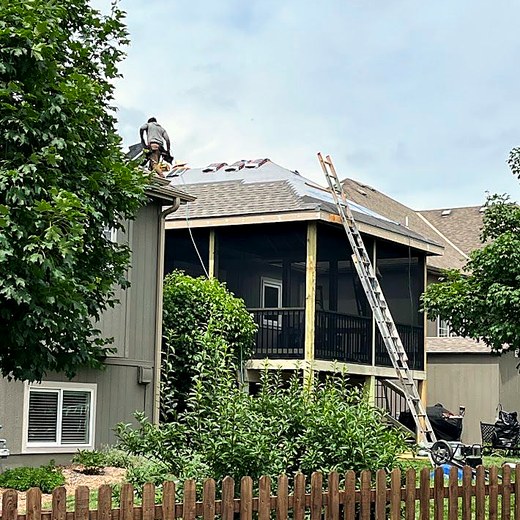
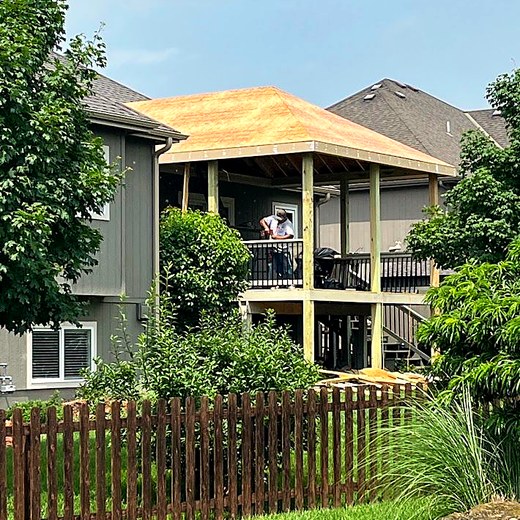
Roofing came to us through outdoor living rather than the other way round. Every covered deck and every screened porch we build needs a roof designed and framed from nothing — rafters sized for the span, sheathed, then shingled or panelled to match the house it attaches to.
That's why the pitch conversation on a covered deck matters so much: architectural shingles need 4:12 or steeper to keep water out, while metal panels perform from around 1:12. The roofing material sets the shape of the structure, not the other way round.
- Rafters framed and sized for the span
- Sheathed, underlaid and finished to match your existing roof
- Architectural shingles, or metal panels for faster drainage
- Pitch and gutter placement set for your exposure
- Permit pulled and inspection met
Roof work on our own builds
See the gallery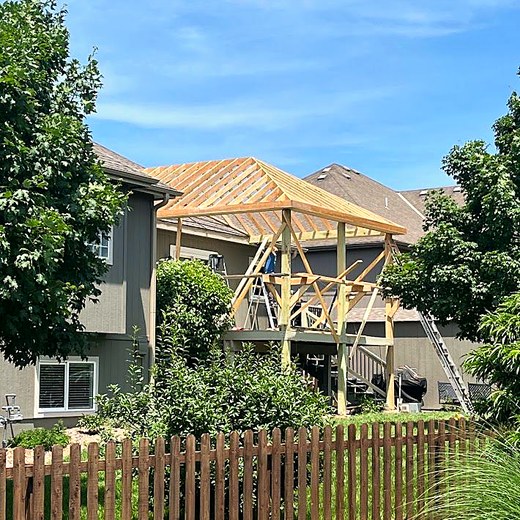


Common questions
How do I know whether I need a repair or a replacement?
Repair handles localised damage — a few lifted shingles, flashing that has failed around a chimney or vent, a valley where water concentrates. Those are worth fixing promptly, because a small leak spreads into decking and insulation quickly.
Replacement becomes the honest answer when damage is widespread, when the roof is near the end of its service life, or when leaks appear in several places at once. Needing multiple repairs in a short span usually means the problem is the roof rather than the spot.
How long should an asphalt roof last here?
Typically 20 to 25 years, depending on exposure and how well it's been maintained. Curling edges, missing granules and cracked shingles are the signs it's getting close.
Jackson and Clay County weather is harder on a roof than a milder climate: spring and summer bring high wind and hail, and winter freeze-thaw cycles stress materials as ice forms and melts repeatedly. Roofs here tend to reach that end sooner rather than later.
What happens after a storm?
We start with a detailed inspection and document everything, because that documentation is what supports an insurance claim. Then repairs are coordinated to address both the immediate leaks and anything structural behind them.
Hail matters more than most people expect. High wind lifts shingles and exposes underlayment to moisture, which you notice. Hail creates dents and cracks that may not leak for a long time but shorten the roof's life significantly — which you don't notice until later.
Do you work with insurance companies?
Yes. Professional documentation of the damage extent and the repairs needed is what a claim turns on, and we record it properly as part of the inspection so your insurer has what it needs.
How often should a roof be inspected?
Regularly, and always after a significant hail or wind event. Catching damage early is the difference between a repair and a replacement, and between a dry house and water in the insulation.
Clearing debris and checking for loose or damaged materials is most of it. The point is to find problems while they're still small enough to be cheap.
Do you build roofs over porches and decks?
Constantly — it's how we came to this work. A covered deck or a screened porch needs a roof structure built from scratch: rafters framed and sized for the span, sheathed, and shingled or panelled to match the house.
If that's what you're after, the covered decks and screened porch pages describe the whole build rather than just the roof on top of it.
Storm gone through? Free estimates and inspections, in person or over the phone.
Tell us what
you'd like built.
We'll come out, walk the space and give you a real number. Free, in person or over the phone, with no obligation.
- (816) 916-0397
- Kearney, MO 64060
- Mon–Fri 8:00am – 6:00pm
- Sat–Sun Closed
Military, first responder and teacher discounts on every project.
What else we build
-
Decks
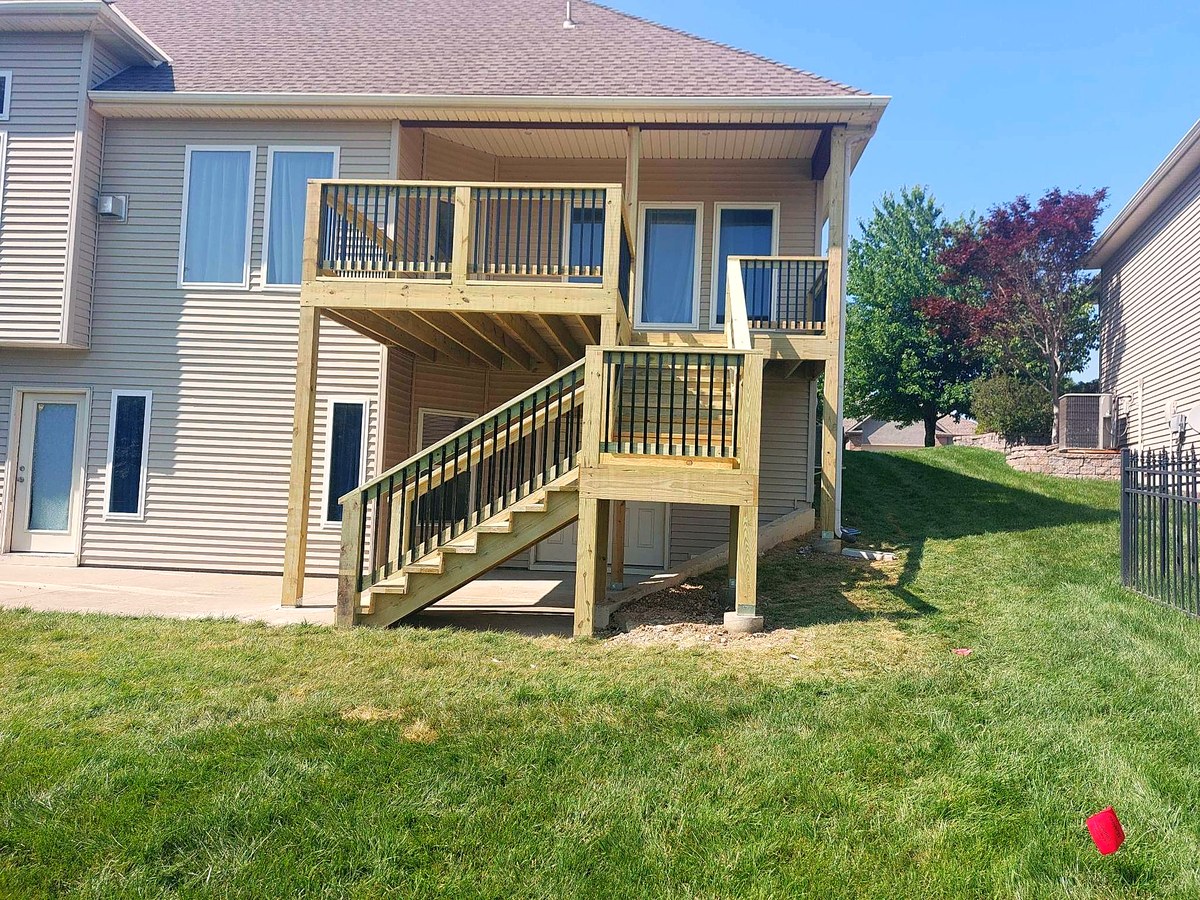
New builds, replacements, additions, stairs and railings in pressure-treated, cedar or Trex composite.
See decks -
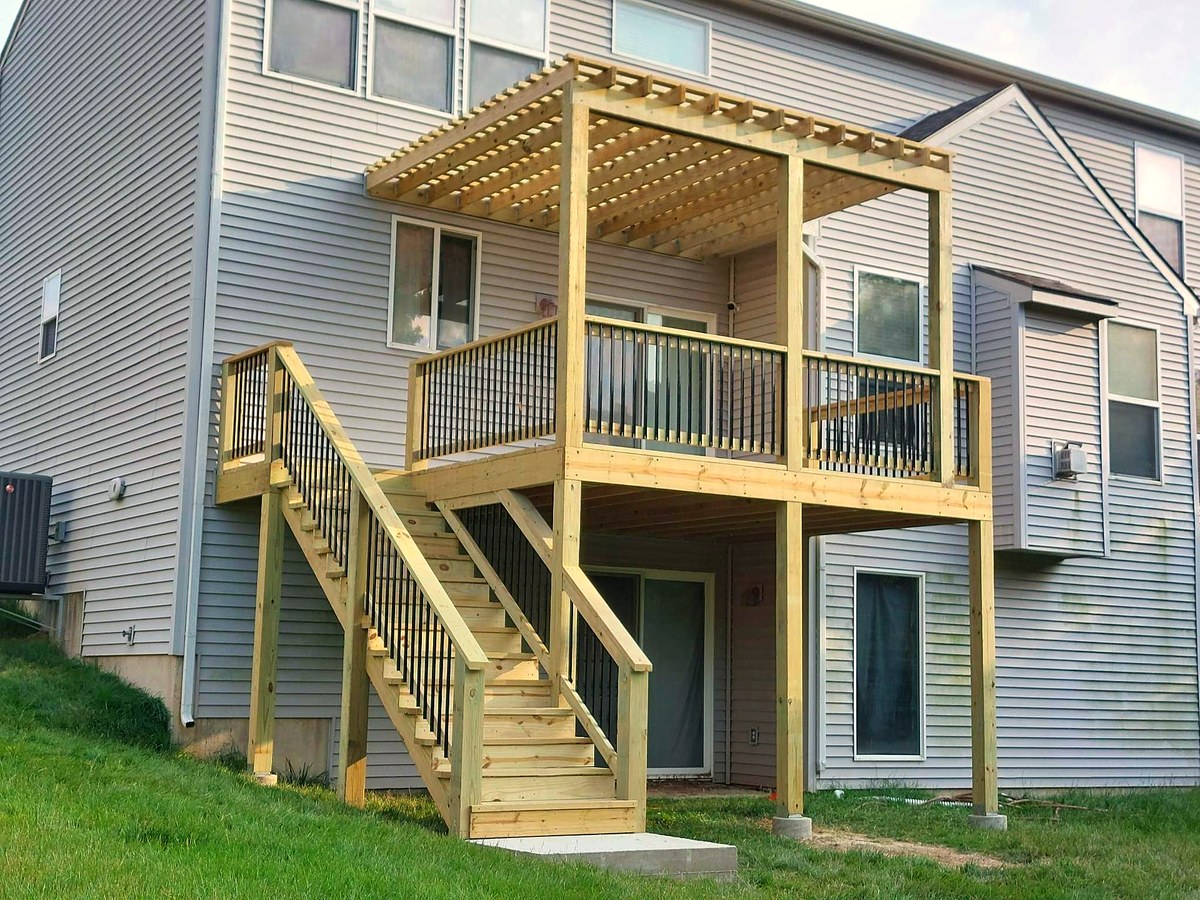
Covered decks & pergolas
Roofs and pergolas that keep the sun and the rain off your afternoon.
See cover decks -
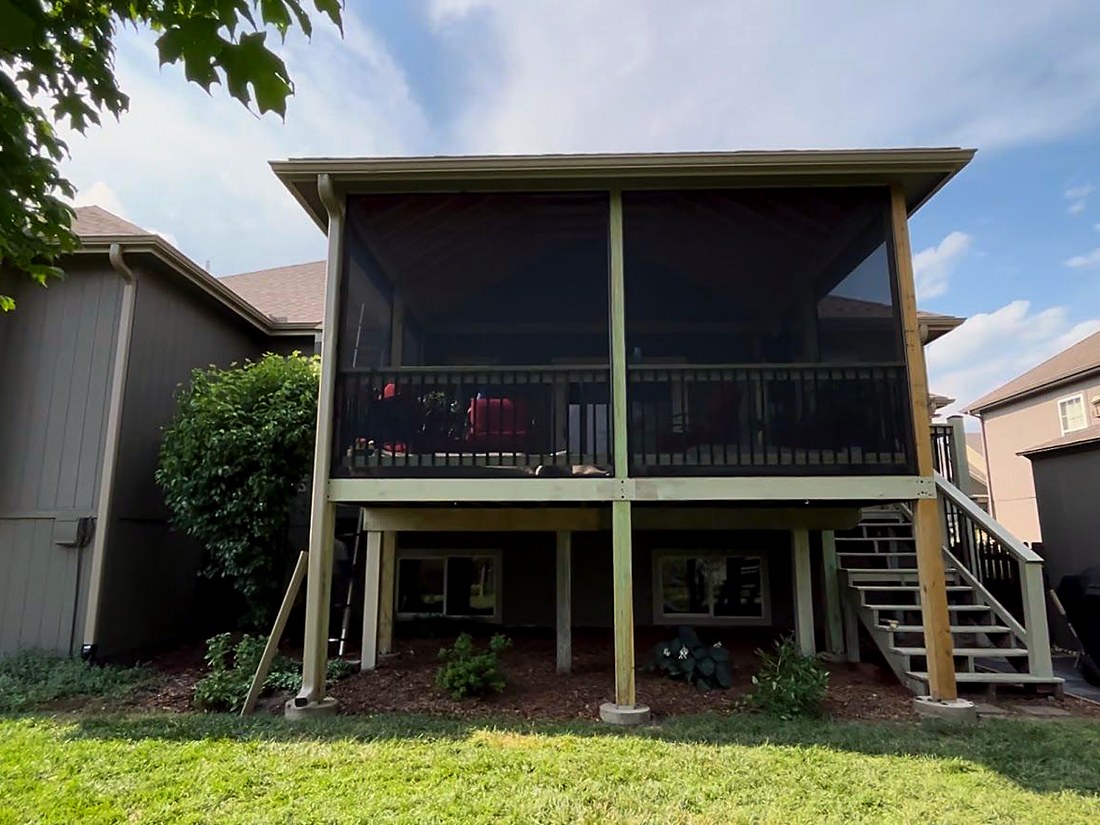
Screened-in decks
Turn the deck you already have into a room you'll actually use in August.
See screened in deck -
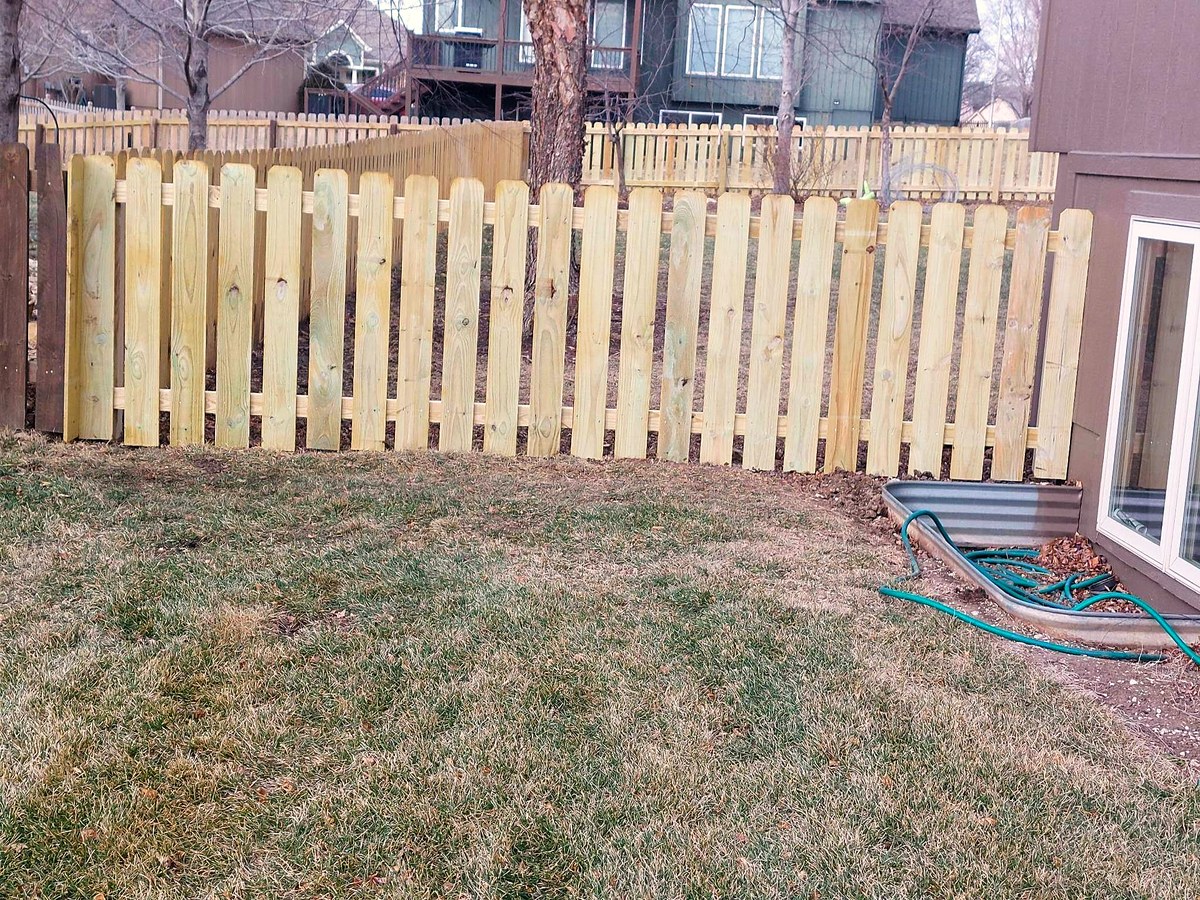
Fences & handrails
Privacy, picket and commercial fencing in wood, metal, aluminum or plastic. Handrails that meet code.
See fences and handrails -
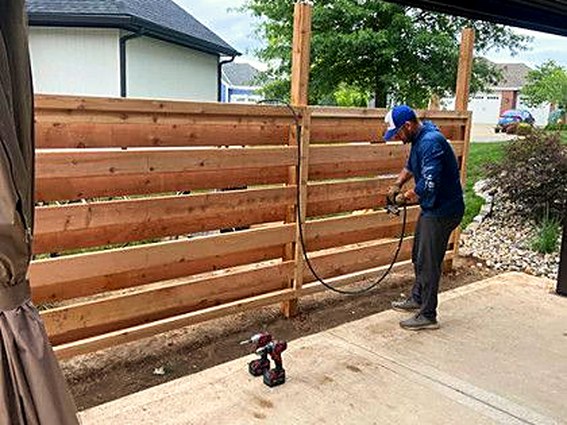
Exterior painting
Sherwin-Williams repaints and staining for siding, decks, fences and trim. We match what's already there.
See exterior painting -
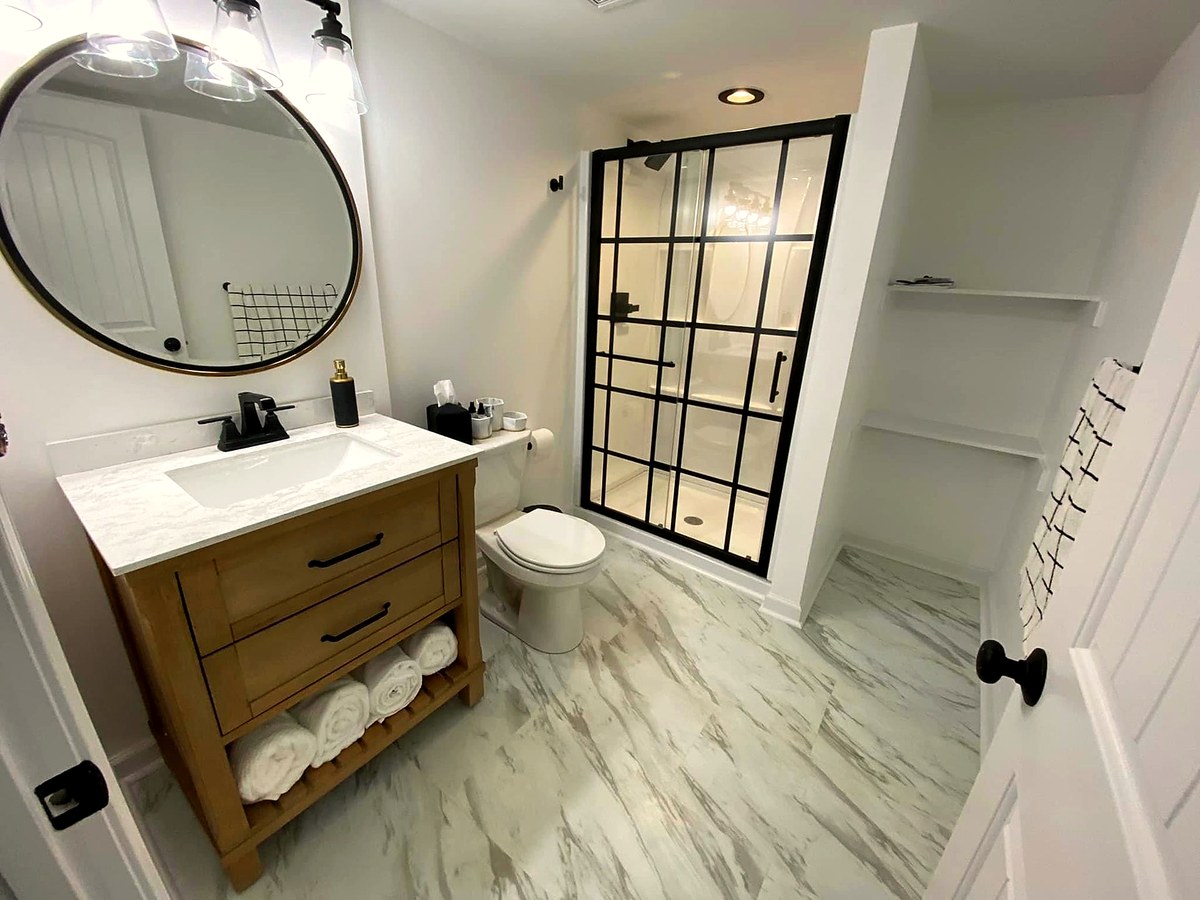
Basement finishing
Framing through finish. Bedrooms, baths and real living space downstairs.
See basement finishing -
Kitchen remodeling
Cabinets, counters, lighting and layout — from a refresh in place to moving the walls.
See kitchen remodeling -
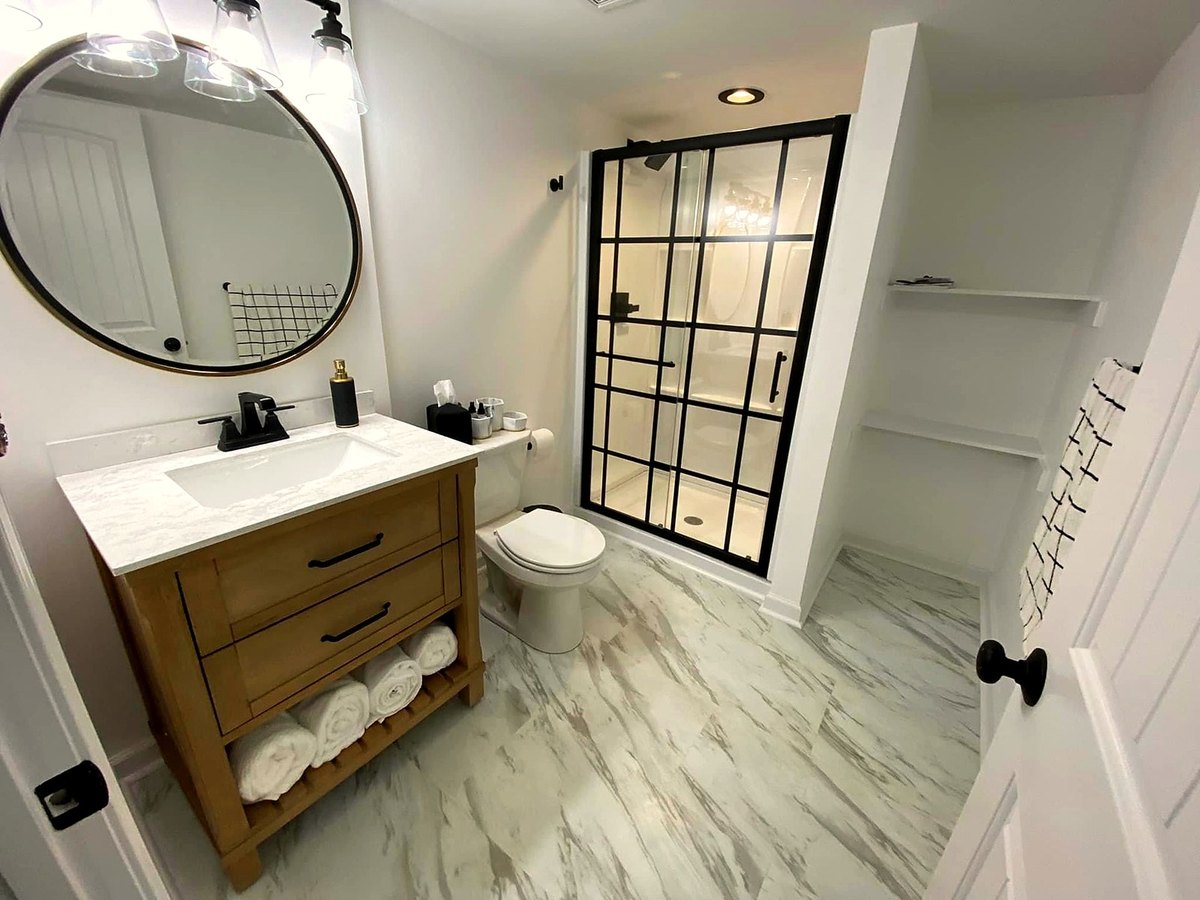
Bathroom renovation
Fixtures, tile, lighting and ventilation, on any floor of the house.
See bathroom renovation


Where we work
- Smithville
- Lawson
- Lake Lotawana
- Lake Tapawingo
- Excelsior Springs
- Independence
- Kearney
- Liberty
- Blue Springs
- Kansas City
- Riverside
- Parkville
- North Kansas City
- Weatherby Lake
- Houston Lake
- Gladstone
- Pleasant Valley
- Tracy
- Leavenworth
- Oak Park
- Shawnee
- Mission Hills
- Lee's Summit
Not on the list? Call us. If you're in the metro, we'll come look.